
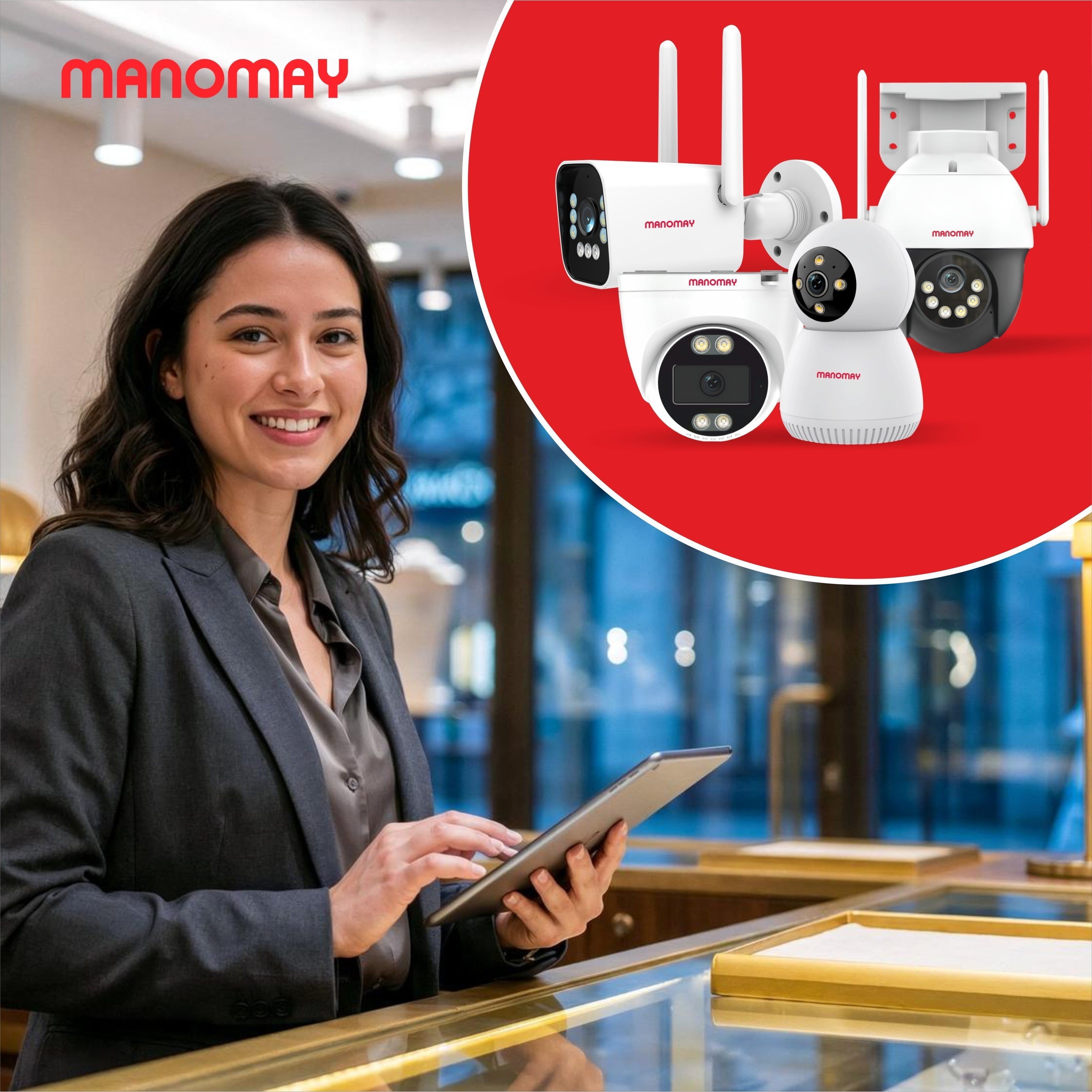

Best CCTV Cameras for Business: Complete Guide to Choosing the Right Security Camera
Best CCTV Cameras for Business: What You Need to Know
Security is an important part of running any business. Whether you operate a retail shop, office, warehouse, showroom, restaurant, school or commercial property, a reliable CCTV camera system can help you monitor important areas, deter unwanted activity and improve overall security.
But with so many options available, choosing the best CCTV camera for business can be confusing.
Should you choose a WiFi CCTV camera, 4G camera, IP camera or PTZ camera? Do you need night vision? Is remote monitoring important? How much storage do you need?
This guide explains the different types of business CCTV cameras and helps you choose the right security solution for your business.
Quick Answer: What Is the Best CCTV Camera for Business?
The best CCTV camera for your business depends on your location, coverage requirements, internet availability and monitoring needs.
-
WiFi CCTV cameras – Best for shops, small offices and locations with reliable WiFi.
-
4G CCTV cameras – Ideal for locations where wired broadband or WiFi is unavailable.
-
IP CCTV cameras – Suitable for offices, warehouses and larger commercial surveillance systems.
-
PTZ cameras – Useful when you need wide-area monitoring and the ability to pan, tilt and zoom.
-
High-resolution CCTV cameras – Recommended for areas where clear identification and detailed footage are important.
For most businesses, the right solution is not simply the camera with the highest resolution. It is the camera that provides the right combination of coverage, image quality, connectivity, storage, night vision and remote monitoring.
Why Do Businesses Need CCTV Cameras?
A business CCTV system can provide several advantages beyond basic surveillance.
1. Monitor Business Premises
CCTV cameras allow business owners and managers to monitor important areas such as entrances, exits, counters, storage rooms, parking areas and warehouses.
2. Improve Security
Visible security cameras can act as a deterrent against unauthorized access and suspicious activity.
3. Remote Monitoring
Modern CCTV cameras can allow authorized users to view live footage remotely using a smartphone or other connected device, depending on the camera and system.
4. Monitor Employees and Customers
CCTV can help businesses understand activity around important areas while supporting workplace and customer safety policies.
5. Protect Inventory
Retail stores, warehouses and stockrooms can use surveillance cameras to monitor valuable inventory and sensitive areas.
Types of CCTV Cameras for Business
Different businesses require different surveillance solutions. Here are some of the most common types of CCTV cameras.
1. WiFi CCTV Cameras
WiFi CCTV cameras connect to a wireless network and are popular for small businesses, retail shops, offices and other locations where WiFi is available.
Benefits of WiFi CCTV Cameras
-
Wireless connectivity
-
Easy remote monitoring
-
Suitable for many indoor applications
-
Smartphone viewing on compatible systems
-
Convenient installation compared with some wired systems
A WiFi CCTV camera can be a good choice for businesses that already have a stable WiFi connection.
2. 4G CCTV Cameras
A 4G CCTV camera uses a mobile network connection instead of relying on a traditional broadband or WiFi connection.
These cameras can be particularly useful for:
-
Construction sites
-
Warehouses
-
Remote locations
-
Farms
-
Temporary business locations
-
Outdoor areas without fixed internet
If your business location does not have reliable broadband or WiFi, a 4G CCTV camera may provide a practical surveillance solution.
3. IP CCTV Cameras
IP cameras, also known as network cameras, transmit video over a network.
They are commonly used in:
-
Corporate offices
-
Retail stores
-
Warehouses
-
Hotels
-
Schools
-
Commercial buildings
-
Large surveillance installations
IP CCTV systems can be scaled according to the size and security requirements of a business.
For larger installations, businesses can combine IP cameras with network video recorders (NVRs) for centralized video recording and management.
4. PTZ CCTV Cameras
PTZ stands for Pan, Tilt and Zoom.
A PTZ CCTV camera can move horizontally and vertically and can zoom into specific areas, depending on the model.
PTZ cameras can be useful for monitoring:
-
Large warehouses
-
Parking areas
-
Commercial compounds
-
Factory premises
-
Large outdoor areas
-
Entrances and open spaces
If one camera needs to monitor a relatively large area, a PTZ camera may be worth considering.
How to Choose the Best CCTV Camera for Your Business
Before purchasing a CCTV camera, consider the following factors.
1. Camera Resolution
Resolution determines the amount of detail captured by the camera.
Common CCTV resolutions include:
-
2MP
-
3MP
For general business surveillance, 2MP or 3MP cameras may be sufficient depending on the viewing area. Higher-resolution cameras can be useful when more detail is required.
However, resolution should not be the only factor you consider.
2. Night Vision
Many businesses require surveillance 24 hours a day.
When choosing a CCTV camera, check its low-light and night-vision capabilities.
Night vision can be especially important for:
-
Store entrances
-
Parking areas
-
Warehouses
-
Factory premises
-
Outdoor locations
-
Business premises operating at night
3. Field of View
The field of view determines how much area a camera can cover.
A wide-angle camera can cover a larger area, while a narrower field of view may provide more detail over a specific area.
Before installation, consider:
Where will the camera be installed?
How large is the area?
Do you need to monitor a specific point or a wider area?
4. Connectivity
Connectivity is another important consideration.
Depending on your business location, you may choose:
WiFi: Suitable where reliable wireless internet is available.
4G: Useful where mobile network connectivity is available but fixed internet is not.
Wired IP: Suitable for structured commercial surveillance systems.
Choose the connectivity option that matches your location and infrastructure.
5. Storage
CCTV footage needs to be stored somewhere.
Depending on the camera and surveillance system, storage may include:
-
MicroSD card
-
NVR storage
-
Cloud storage
-
Other compatible recording solutions
The amount of storage you need depends on factors such as the number of cameras, video resolution, recording mode and how long you want to retain footage.
6. Remote Monitoring
Remote monitoring is one of the most useful features for business owners.
With a compatible CCTV system, you may be able to check live video and recorded footage remotely using a smartphone.
This can help business owners monitor their premises even when they are away from the location.
7. Outdoor or Indoor Installation
Not every CCTV camera is designed for outdoor use.
For outdoor installations, check the camera's environmental protection rating and suitability for conditions such as dust, moisture and temperature.
For indoor applications, you can focus more on factors such as image quality, viewing angle, installation position and design.
Best CCTV Camera for Different Types of Businesses
The ideal camera depends on your business environment.
| Business Type | Recommended CCTV Solution |
|---|---|
| Retail Shop | WiFi or IP CCTV Camera |
| Small Office | WiFi or IP CCTV Camera |
| Warehouse | IP or PTZ CCTV Camera |
| Construction Site | 4G CCTV Camera |
| Remote Location | 4G CCTV Camera |
| Large Commercial Property | IP + PTZ CCTV System |
| Parking Area | Outdoor IP/PTZ Camera |
| Restaurant | WiFi/IP CCTV Camera |
| Factory | IP + PTZ CCTV System |
| Small Outdoor Business | 4G or Outdoor IP Camera |
This table is a starting point. The final camera selection should be based on the actual area, network availability and security requirements.
Features to Look for in a Business CCTV Camera
When comparing CCTV cameras, look for features that match your business requirements.
Important Features
-
High-resolution video
-
Night vision
-
Wide viewing angle
-
Motion detection
-
Remote monitoring
-
Two-way audio where required
-
Local or network storage
-
WiFi or 4G connectivity
-
Weather resistance for outdoor use
-
Pan, tilt and zoom functionality where required
-
Mobile app compatibility
-
Reliable recording
You do not necessarily need every feature. The goal is to select the features that solve your specific security requirements.
CCTV Camera for Shop
For a retail shop, CCTV cameras can be installed at strategic locations such as:
-
Main entrance
-
Cash counter
-
Customer area
-
Storage area
-
Back entrance
-
Loading/unloading area
A WiFi CCTV camera can be a convenient choice for smaller shops with reliable internet connectivity.
For shops requiring multiple cameras, an IP CCTV system may offer better scalability.
CCTV Camera for Office
Office surveillance generally focuses on entrances, reception areas, corridors, storage rooms and other important locations.
For a small office, WiFi cameras can provide a convenient monitoring solution.
For larger offices, an IP camera system with centralized recording can provide better management of multiple cameras.
Businesses should also establish appropriate privacy and workplace policies when using surveillance cameras.
CCTV Camera for Warehouse
Warehouses often have large areas that require continuous monitoring.
For warehouses, consider:
-
High-resolution cameras
-
Wide-angle coverage
-
Night vision
-
Outdoor-rated cameras where required
-
PTZ cameras for large open areas
-
NVR-based recording for multiple cameras
A combination of fixed IP cameras and PTZ cameras can be useful for larger warehouse environments.
CCTV Camera for Remote Business Locations
Remote locations can create a connectivity challenge.
If broadband or WiFi is not available, a 4G CCTV camera can be an attractive option where suitable mobile network coverage exists.
This can be useful for construction sites, farms, temporary facilities, warehouses and other locations where installing fixed internet may not be practical.
How Many CCTV Cameras Does a Business Need?
There is no fixed number of CCTV cameras required for every business.
The number depends on:
-
Size of the premises
-
Number of entrances and exits
-
Number of floors
-
Blind spots
-
Important assets
-
Parking or outdoor areas
-
Required level of monitoring
-
Camera viewing angle
For example, a small retail shop may require only a few strategically positioned cameras, while a warehouse or factory may require a larger multi-camera system.
The best approach is to first create a basic surveillance layout and identify important areas before purchasing cameras.
CCTV Camera Installation Tips for Businesses
Choosing the right camera is only part of the security solution.
Follow these basic installation considerations:
Position Cameras Strategically
Place cameras where they can monitor important areas without unnecessary obstruction.
Avoid Strong Backlighting
Direct bright light behind the subject can affect image quality.
Cover Entry and Exit Points
Entrances and exits are usually important areas for business surveillance.
Protect the Camera
Outdoor cameras should be suitable for outdoor conditions.
Check the Network
For WiFi and IP cameras, make sure network connectivity is reliable at the installation location.
Test Night Performance
Do not evaluate a CCTV camera only during the daytime. Check its performance in low-light conditions as well.
CCTV Camera vs Traditional Security Systems
Traditional security measures and CCTV cameras can work together.
CCTV provides visual monitoring and recorded footage, while other security measures can help control physical access and respond to security incidents.
For many businesses, a layered security approach can be more effective than relying on a single security measure.
Frequently Asked Questions About CCTV Cameras for Business
What is the best CCTV camera for a business?
The best CCTV camera depends on your business location and security requirements. WiFi cameras are suitable for many small businesses, 4G cameras can work well in locations without fixed internet, IP cameras are suitable for scalable commercial systems, and PTZ cameras are useful for monitoring larger areas.
Which CCTV camera is best for a shop?
WiFi or IP CCTV cameras are commonly suitable for shops. The right choice depends on the shop size, internet connectivity, required coverage and storage requirements.
Is 4G CCTV better than WiFi CCTV?
Neither is universally better. A WiFi CCTV camera is suitable when reliable WiFi is available, while a 4G CCTV camera can be useful in locations where fixed broadband or WiFi is unavailable.
Which CCTV camera is best for a warehouse?
IP CCTV cameras are commonly suitable for warehouses because they can be used as part of multi-camera network surveillance systems. PTZ cameras can also be useful for monitoring large open areas.
Do business CCTV cameras work at night?
Many modern CCTV cameras support night vision or low-light surveillance. However, night performance varies by camera model and installation conditions.
How long should CCTV footage be stored?
There is no single storage period that applies to every business. Storage requirements depend on the business, number of cameras, resolution, recording settings and available storage capacity. Businesses should also consider applicable privacy and legal requirements.
Can I watch my business CCTV from my phone?
Many modern CCTV systems support remote viewing through a compatible mobile application, provided the camera or recorder has the required network connectivity and remote-access functionality.
Do I need an NVR for CCTV cameras?
An NVR is commonly used with network/IP CCTV cameras when centralized recording is required. However, some standalone cameras can record locally using compatible storage without an NVR.
Final Thoughts: Choosing the Best CCTV Camera for Your Business
The best CCTV camera for business is not necessarily the most expensive or highest-resolution camera. The right choice depends on your business environment, coverage requirements, connectivity, storage, night-vision needs and monitoring objectives.
For a small shop or office, a WiFi CCTV camera may provide a simple solution. For remote locations, a 4G CCTV camera can be useful. For larger commercial properties, IP cameras and PTZ cameras can provide scalable surveillance coverage.
Before buying, identify the areas you need to monitor and then choose a CCTV system that provides the right combination of video quality, connectivity, coverage, storage and reliability.
If you are looking for CCTV cameras for your shop, office, warehouse, factory or other commercial property, explore the available business security camera solutions and choose a system based on your specific surveillance requirements.
Question: What is the best CCTV camera for business?
Answer: The best CCTV camera for business depends on the location and surveillance requirements. WiFi CCTV cameras are suitable for many small shops and offices, 4G CCTV cameras are useful for remote locations without fixed internet, IP cameras are suitable for larger commercial surveillance systems, and PTZ cameras are useful for monitoring large areas.
FAQ Questions
-
What is the best CCTV camera for a business?
-
Which CCTV camera is best for a shop?
-
Is 4G CCTV better than WiFi CCTV?
-
Which CCTV camera is best for a warehouse?
-
Can I watch my business CCTV from my phone?
-
Do I need an NVR for CCTV cameras?
-
How many CCTV cameras does a business need?
-
Do business CCTV cameras work at night?
Share:
Wireless Surveillance Cameras: Smart Security for Every Home and Business
Best Company for Security Cameras